 檔案1
檔案1
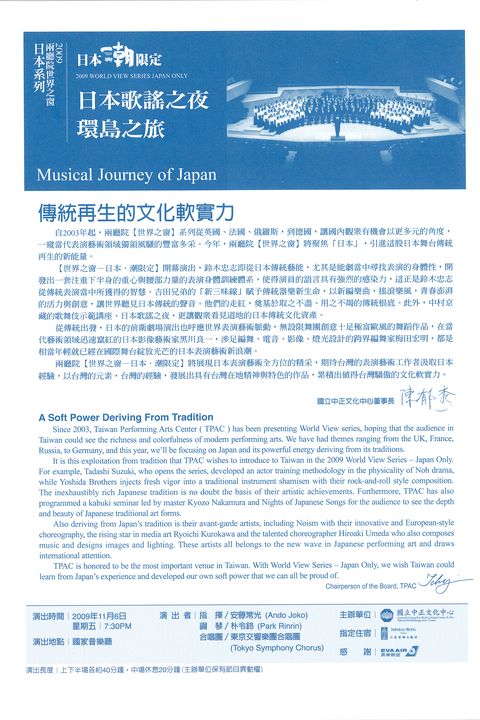
2009兩廳院世界之窗日本系列-日本歌謠之夜 環島之旅
Musical Journey of Japan
基本資料
2009-11-06
2009/11/06
〈榧山上〉〈這條路〉〈守株待兔〉〈拘橘花〉〈中國地方的搖籃曲〉選自林光《日本抒情歌曲集》
日本當代作曲家林光 ( Hayashi Hikaru,1931- ) 生於東京,東京藝術大學作曲組肄業後於 1953年曾與間宮芳生 ( Mamiya Michio, 1929- ) 、外山雄三 ( Toyama Yuzo,1931- ) 等人組織「三羊會」致力於戰後日本國民音樂之推廣與復興運動,作品包含交響、歌劇、戲劇音樂及合唱音樂等,為日本具有舉足輕重地位之當代音樂作曲家。
《日本抒情歌曲集》為林光受東京混聲合唱團委託,於1964年至 1981年間汲選瀧廉太郎 ( Taki Rentaro,1879-1903 ) 、山田耕筰 ( Yamada Kosaku, 1886-1965 ) 等日本重要的近代作曲家之名曲改編而成的合唱曲集,亦為林光合唱作品中傳唱最廣的一套曲目,林光為每首曲子皆編寫了無伴奏及鋼琴伴奏兩個版本,保留了原曲的質樸況味。
由日本近代著名童謠作家暨詩人北原白秋 ( Kitahara Hakushu,1885-1942 ) 作詞、山田耕筰曲的〈榧山上〉描寫日本山間緊落家庭的團圓溫暖氣氛,隱含濃厚的日本風物況味。洗鍊並充滿追憶的〈這條路〉堪稱為日本代表歌曲,合唱版本亦保留了原曲的風貌。〈守株待兔〉亦為北原白秋著名童詩,歌詞靈感源自中國古籍《韓非子》中「守株待兔」之由來,林光以鮮活的節奏變化表現農人苦候捕捉野兔卻久候不至的焦急心情。
〈枸橘花〉為奠定北原白秋於日本文學史上屹立不搖地位的代表性詩作,山田耕筰巧妙的將詩韻的抑揚頓挫融入音樂當中,流露自然質樸的情感。〈中國地方的搖籃曲〉原為岡山縣民謠,為山田耕符受到友人請託,將其自幼聆聽母親演唱的搖籃曲編寫成為藝術歌曲,自此成為日本廣為人知的搖籃曲。
《故鄉的四季》組曲集
《故鄉的四季》組曲集為作曲家源田俊一郎編曲出版,共合12首日本琅琅上口的童謠及民謠,以高野辰之 ( Takano Katuyuki,1876-1947 ) 作詞,岡野貞一 ( Okano Teichi, 1878-1941 ) 作曲的〈故鄉〉貫穿組曲的開頭與結尾,充滿對於故鄉的懷念與親人的思念。第二曲〈春天的小河〉及第三曲〈朦朧月夜〉兩曲亦為高野辰之作詞,間野貞一作曲,前者描繪春日河岸盛開的花朵與愉悅的游魚,後者則勾勒夕陽西沉後月光映照下的寧靜鄉間風貌。
第四曲〈鯉魚旗〉為著名的日本童謠,選自文部省唱歌,本曲時序推入春末夏初,描繪象徵夏季即將來到的鯉魚旗隨風飄蕩,美不勝收。第五曲〈採茶〉亦選自文部省唱歌,描繪立夏前夕所謂「第八十八夜採茶」的傳統習俗,歌曲描述眾人在晴天下辛勤採茶的模樣。第六曲 ( 夏天不來 ) 歌詞為日本著名文學家佐佐木信綱 ( Sasaki Nobutsuna, 1872-1963 ) 所作,小山作之助 ( Koyama Sakunosuke,1864-1927 ) 譜曲,描寫初夏梅雨期間的鄉間風貌。第七曲〈我乃海之子〉選自文部省唱歌,歌中所描述的「海」所指的是日本南方的鹿兒島灣,描述海島男兒以海為家的寬闊胸襟。第八曲〈村祭典〉選自文部省唱歌,為村民慶祝豐收,向鎮守村落安寧的神析表達感謝之意歡欣鼓舞的歌曲。第九曲〈紅葉〉為高野辰之作詞,岡野貞一作曲,描繪秋日紅葉飄散水面形成的美麗織錦。第十曲〈冬景〉選自文部省唱歌,勾勒冬日清晨的恬靜景色。第十一曲〈雪〉亦選自文部省唱歌,則是降雪時的大地風貌與小動物們取暖的溫暖景象。第十二曲呼應開頭再以〈故鄉〉為名。島灣,描述海島男兒以海為家的寬闊胸襟。第八曲〈村祭典〉選自文部省唱歌,為村民慶祝豐收,向鎮守村落安寧的神析表達感謝之意歡欣鼓舞的歌曲。第九曲〈紅葉〉為高野辰之作詞,岡野貞一作曲,描繪秋日紅葉飄散水面形成的美麗織錦。第十曲〈冬景〉選自文部省唱歌,勾勒冬日清晨的恬靜景色。第十一曲〈雪〉亦選自文部省唱歌,則是降雪時的大地風貌與小動物們取暖的溫暖景象。第十二曲呼應開頭再以〈故鄉〉為名。
〈知覽節〉〈搗米歌〉〈天滿市集〉〈田中除草歌〉〈新生祝禱之歌〉選自間宮芳生《根據日本民謠改編的十二首創意曲》
日本當代作曲家間宮芳生1929年生於北海道旭川市,為「山羊會」成員之一,致力於戰後日本民族音樂之推廣與復興運動,擅長以日本民哥大作為素材寫作,因而有「日本巴爾托克」美名,作品包含交響曲、歌劇、合唱音樂、電影及戲劇配樂等,最為人所知的作品便是1988年《螢火蟲之墓》電影配樂。
《根據日本民謠改編的十二首創意曲》為間宮芳生1976年蒐羅日本各地著名民謠編寫而成的組曲集,皆為無伴奏合唱曲,堪稱為日本民謠合編寫組曲作品中最能表現土地生活的作品集。〈知覽節〉為著名的鹿兒島民謠,表現農村年輕男女質樸的愛戀。純男聲合唱的岩手縣民謠〈搗米歌〉描述離開雙親而赴任工作的年輕男子辛勤搗米,由於思念雙親與故鄉而不禁濟然淚下。〈天滿市集〉則為大阪地方相當著名的搖籃曲。女聲三部合唱的〈田中除草歌〉為日本東北的秋田縣民謠,由於東北地區男性為了生計因素外出工作,農事大多由女性所負責,旋律富有東北地區的獨特韻味。
〈新生祝禱之歌〉為青森地方民謠,傳統日本習俗中在嬰兒誕生第七日皆會為新生兒舉行命名儀式,並演唱此種民謠,祈禱新生嬰孩平安乖巧的成長。
〈箱根八里〉〈甜點和姑娘〉〈喀秋莎之歌〉〈荒城之月〉〈海濱之歌〉選自林光《日本抒情歌曲集》
〈箱恨八里〉為鳥居枕作詞,瀧廉太郎譜曲,別名〈箱根馬子唄〉,為1901年發行的《中學唱歌》中所載錄,歌詞描繪箱根之山的險峻雄偉,大量引用中國文學語句,諸如李白〈蜀道難〉中的「一夫當關,萬夫莫開」,樂曲充滿濃厚的進行曲風。由西条八十 ( Saijo Yaso, 1892-1970 ) 同名詩作為詞,橋本盟彥 ( Hashimoto Kunihko, 1904-1949 ) 譜曲的著名歌謠〈甜點和姑娘〉旋律輕巧甜美。
Mountain, This Road, Waiting in Vain, Flower of the Trifoliate Orange, Folk Lullaby in Chugoku Region Arranged by Hayashi Hikaru Hayashi Hikaru is an extremely influential Japanese contemporary composer. He and other musicians have been devoted to the promotion and revival of Japanese national music, including symphony, opera, theatrical music, choral music etc. Commissioned by the Tokyo Philharmonic Chorus, Hayashi Hikaru rearranged works by modern Japanese composers. With both a cappella (i.e . no accompaniment) and piano accompaniment versions, the earthliness of the original tunes is fully displayed. Torreya Mountain , with lyrics written by poet Kitahara Hakushu and composed by Yamada Kosaku, depicts the warm and genial atmosphere when families get together in their village home. This Road is a song that best represents Japan for its terseness and reminiscence. Waiting in Vain is another children's poem written by Kitahara. Inspired by a story told by Chinese philosopher Han Feizi, Kitahara talks about the anxious farmer who has waited for the hare for a long while. Hayashi expresses such impatience with lively and mercurial rhythms. Flowers of the Trifoliate Orange is the poem that certified Kitahara's masterly status in the Japanese literary circle. Yamada's tune subtly combines the cadence of the poem into his music, conveying natural and rustic emotions. Folk, Lullaby in Chugoku Region was originally a folk song in Okayama Prefecture, and Yamada's version makes it a lullaby known to all Japanese. The Four Seasons of My Hometown The Four Seasons of My Hometown, arranged by Genda Shunichiro, contains 12 popular Japanese children's poems and folk songs. The whole suite begins and ends with My Native Land, a song full of nostalgia written by Takano Katsuyuki (lyrics) and Okano Teichi (music).Spring Stream and Dreamy Moonlit Night are composed by Okano and have their lyrics written by Takano. The former describes joyfully swimming fish and blooming riverside flowers on a fine spring day, while the latter portrays the serenity of a quiet moonlit countryside. Carp Streamer is selected from the music textbook compiled by Japan's Ministry of Education , Culture, Sports, Science and Technology (referred to as the MEXT textbook in the following passages). It depicts how carp streamers, symbols of the coming summer, float in the wind. Tea Harvest, also selected from the MEXT textbook, is about the tradition of picking tealeaves the night before The Beginning of Summer (a solar term). Summer Has Come is written by noted litterateur Sasaki Nobutsuna (lyrics) and Koyama Sakunosuke (music). It portrays a scenic countryside in the early summer rain season. A Child of the Sea (MEXT textbook) describes the breadth of mind of Kagoshima men. Also from the MEXT textbook, Village Shrine Festival is a joyful song that expresses villagers' gratitude to Gods who grant them an abundant harvest. Red Leaves, written by Takano (lyrics) and Okano (music), depicts a breath-taking scene of red autumn leaves drifting on the river. Winter Scenary (MEXT textbook) draws a serene picture of a fine winter morning. Snowfall is another selection from the MEXT textbook. It's about the snow-white landscape and the animals trying to warm themselves. Echoing the beginning of the suite, the very last song is My Native Land again. Chiran Bushi, Kometsuki Uta, Tenmano IChiwa, Tanokusatori Uta, Oboko Iwai Uta Selected from Twelve Inventions based on Japanese Folk Songs arranged by Michio Mamiya Michio Mamiya has also been devoted to Japanese national music. He is apt at raking inspirations from folk songs, henceearning the title “the Japanese Bela Banok"". His work ranges from symphony, opera, choral music and scores for films and theatre.Twelve lnventions from Japanese Folk Songs di splays traditional lifestyle to its fullest with a cappella tracks. Chiran Bushi tells the simple romance of village youths in Kagoshima, while Kometsuki Uta talks about a young man's teary longing for his parents and hometown after he left Iwate Prefecture for work. Tenmano Ichiwa is a noted lullaby in Osaka.Tanokusatori Uta is a three-pan female choral folk song in Akita Prefecture where men are away for work while women stay for farming. Oboko lwai Uta sings about a tradition in Aomori Prefecture where a naming and blessing ceremony is held on the 7th days of the child's birth. Hakone Hachiri, The Candy and the Girl, Song of Katyusha, The Moon over the Ruined Castle, Song of Seashore Arranged by Hayashi Hikaru Hakone Hachiri is written by Torii Makoto (lyrics) and Torri Makoto (music). The song quotes substantially from ancient Chinese literature to depict the danger and grandeur of Hakone mountains. The Candy and the Girl is a poem written by Saijo Yaso, and its light-hearted tune is composed by Hashimow Kunihiko. With Shimamura Hogetsu and Soma Gyofu the lyricists and Nakayama Shiinpei as composer, Sonasg of Katyusha was originally an interlude in a play. Its fusion of the Japanese and western style makes it a classic in Taisho Period The lyrics of The Moon over the Ruined Castle are written by Tsuchii Bansui, a poet who was inspired by two castles in Fukushima Prefecture and Miyagi Prefecture. The melody, composed by Taki, expresses the pensive mood perfectly. Song of seashore is written by Hayashi Kokei (lyric) and Narita Tamezo (music). Narita composed the song for a girl he adored. Though the romance failed, the song successfully won the heart of many in Taisho Period.
榧山上
這條路
守株待兔
枸橘花
中國地方的搖籃曲
故鄉的四季
知覽節
搗米歌
天滿市集
田中除草歌
新生祝禱之歌
箱根八里
甜點和姑娘
喀秋莎之歌
荒城之月
海濱之歌
かやの木山の (Torreya Mountaiin)
この道 (This Road)
待ちぼうけ (Waitinf in Vain)
かちたの花 (Flower of the Trifoliate)
中国地方の子守唄 (Folk Lullaby in Chugoku Region)
ふゐさとの四季 (The Four Seasons of My Hometown)
Chiran Bushi (Chiran Song)
Kometsuki Uta (Song for Rice Pounding)
Tenmano Ichiwa (Tenma Market)
Tanokusatori Uta (Song for Weeding)
Oboko Iwai Uta (Blessing Song for the New Born)
Hakone Hachiri
The Candy and the Girl
Song of Katyusha
The Moon over the Ruined Castle
Song of Seashore
典藏單位:國家兩廳院,實體文物請至兩廳院表演藝術圖書館申請觀看。
媒體類型:紙本及電子檔

評分
 電話:02-3393-9798 ︳傳真:02-3393-9798 ︳地址:100011 臺北市中山南路 21-1 號
Copyright ©國家表演藝術中心數位典藏系統 版權所有 All rights reserved.
電話:02-3393-9798 ︳傳真:02-3393-9798 ︳地址:100011 臺北市中山南路 21-1 號
Copyright ©國家表演藝術中心數位典藏系統 版權所有 All rights reserved.