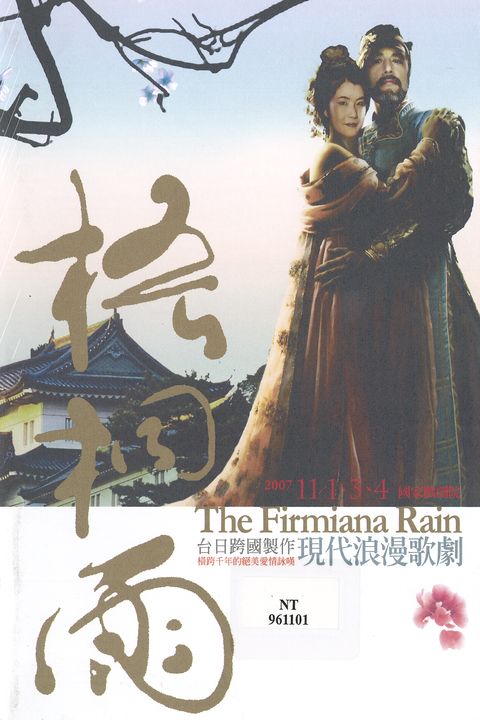
梧桐雨
The Firmiana rain
基本資料
2007-11-01
2007/11/01
2007/11/03-2007/11/04
本歌劇《梧桐雨》旨在以現代角度,詮釋唐明皇與楊貴妃千年不朽的愛情悲劇。劇本主要依據清朝洪昇的《長生殿》,並參照元代白樸的《梧桐雨》寫就,但又以另種觀點作了超寫實的轉換。歌劇遂循著舊劇故事線頭發展,新附加的心理層次由畢安生原創的法文歌詞呈現,有如電影中的蒙太奇,藉以開創另一度的思索空間。
時代既為唐朝,正值中國史上政治的黃金期,風雲際會,文風鼎盛,又兼充份融會各國的文化精神,氣魄豪闊。國內既有多民族的融合,對外亦是多面向的世界化格局。玄宗開創了開元盛世,躊躕滿志。急於要宦官高力士尋覓絕代麗人,與他同享空前物質與藝術的豐饒。楊貴妃適足是盛唐美學的體現,妙解音律,能歌善舞,玄宗得之,有如得到人間至寶。當代的文人則將這傾國傾城的美人,視作國勢衰竭的禍源。卻不想玄宗在勵精圖治後,耽於逸樂,無心國事,又兼好大喜功,重用胡將,導致天寶年間安祿山作亂。而在避亂逃難途中,他允諾相守至天荒地老的美人,終也不免「宛轉蛾眉馬前死」的宿命。楊妃十足是政權衡突下,易於著力攻擊的弱點,自成為抒發群體憤怒情緒的眾矢之地,及玄宗荒唐尋樂,幾乎亡國的代罪羔羊。
歷史上她的面目無寧是模糊的,由於她的絕世美貌及音樂舞蹈的特殊天賦,民間傳說她是天上謫世的玉妃。本劇循著這傳奇的角度再延伸,讓她臨終前了悟生死,羽化登仙。她並在明皇暮年深切的企盼中回轉,使他亦悟得榮耀繁華轉頭空,助他辭別人世時,魂魄亦得超昇,復歸無極。由此強調這千年傳頌愛情故事的性靈層次。
李白這位永世浪漫詩人的代表,則在此歌劇中吟出所有重要的下場詩,並適時點出哲理,及唱出蘊含深意的清平調。最後在把酒望月的詩中,在湖心撈月而亡,表現謫仙詩人的逸興。李白吟詩的唱腔,有時借用北管曲牌或歌仔調,以詡實表現出詩韻的平仄抑揚。
歌劇中,經由音樂體現,現代與古代時空得以交流。將採取由唐代保存至今的日本雅樂及敦煌琵琶譜,作樂曲動機,形成聲音背景,予本劇亙久的永恆之感。並將截取《長生殿》中崑曲唱腔的某些片段和北管曲牌,作聲樂線條的素材,以聲韻的起伏流動,塑造本劇的音樂風格。再逐次填入新的音樂素材,展開較為現代的織度。徐緩的古樂節奏,能瞬時將時光拉進古老的年代,依著劇情發展,經由節拍轉換,旋而進入現代的快速節拍。
樂團編製除了西洋室內管絃樂團外,尚加入竹笛、琵琶、羯鼓等古樂器,模仿唐樂編制。琵琶、羯鼓並有時在舞台上,作類似宮廷樂的演出。音樂承襲傳統歌劇對人物情感的刻劃:愛、官能感、野心、衝突、兩難、悲哀、超昇等,並提供各角色的戲劇空間。
─陳玫琪
The story line of the opera is based on The Firmiana Rain and The Palace of Longevity, two versions of the same love tragedy from the T' ang dynasty. The opera is a modern rendering of the old story.
The T'ang Ming Emperor's love for poetry and music influenced his love for the Empress Yang Yu-Huan, who was the personification of the aesthetics of the T'ang dynasty. During her life span (739~757AD), the T'ang empire was the most powerful kingdom in the East: having great influence politically, economically and artistically. Especially, it was the golden age of Chinese poetry; the time when Li Po thrived. China was also the main center for Medieval Asian music and dance, because of the noble people's demand.
Yang Yu-Huan is the woman who embodied the beauty, exuberant energy, and in a sense, decadence of the cosmopolitan culture of the high T' ang. Sadly, she became the symbol that marked the sharp decline of the T' ang dynasty from it's prime. Much of this blame came from the leading intellects and military men of the time- reflecting the view of a male centered society. Certainly this notion runs current to the Western sensibility of the same period. In this particular story we see a conflicting image of womanhood. It is one where a woman may be appreciated, rewarded and revered for her artistic sensibilities and gifts of beauty. Yet conversely, this same woman becomes reviled when connected to political power- real or imagined. It was the power of her sex that acted as her rise to Number One Consort, but equally, was the cause of her death. The sacrifice of the heroine makes to save the Emperor's kingdom (read: ""her man"") should be viewed as the manifestation of stabbing the soft spot in any power struggle.
Could one really blame the toppling of the whole kingdom on one beauty? Certainly not, yet familiar precedents abound in such examples as Helen of Troy, Cleopatra and even superficially, Lady Diana. In all historic documents, the face and identity of Yang Yu-Huan were blurred. Because of her legendary beauty and talent, she was said to be a sent-down Goddess from Heaven.
Obviously this is a tale with universal application and familiarity. With regard to political implications we see a statesman who is no longer concerned with the general responsibilities of running a kingdom. As we learn there are disastrous results. This is a theme one sees explored often in the plays of William Shakespeare. On a romantic level, the Place of Longevity is almost an archetypal story of transcendence through the rigors of loving another human being. Ironically, it seems only right that he and she meet on another plain, since on earth, there was an imbalance between the two. Heaven though, represents the possibility of love unencumbered by the tests of politics, power and even sexuality.
─by May-Tchi Chen
一、定情
二、聞樂
三、夜怨、密誓
四、驚變
五、埋玉
六、聞鈴、仙憶、重圓
Scene 1: Declaration of Love
Scene 2: The Music
Scene 3: Night of Grief, Vows
Scene 4: Banquet and Uproar
Scene 5: The Toppling
Scene 6: Bells / Mouring, Redemption / Reunion
典藏單位:國家兩廳院,實體文物請至兩廳院表演藝術圖書館申請觀看。
媒體類型:紙本及電子檔

評分
 電話:02-3393-9798 ︳傳真:02-3393-9798 ︳地址:100011 臺北市中山南路 21-1 號
Copyright ©國家表演藝術中心數位典藏系統 版權所有 All rights reserved.
電話:02-3393-9798 ︳傳真:02-3393-9798 ︳地址:100011 臺北市中山南路 21-1 號
Copyright ©國家表演藝術中心數位典藏系統 版權所有 All rights reserved.