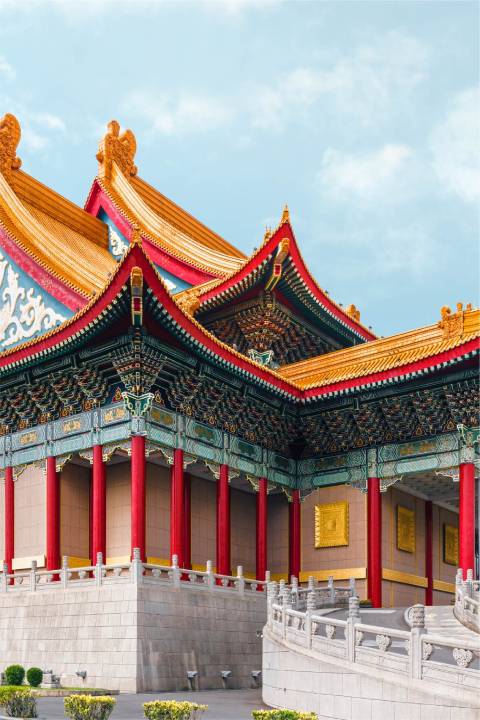
 檔案1
檔案1
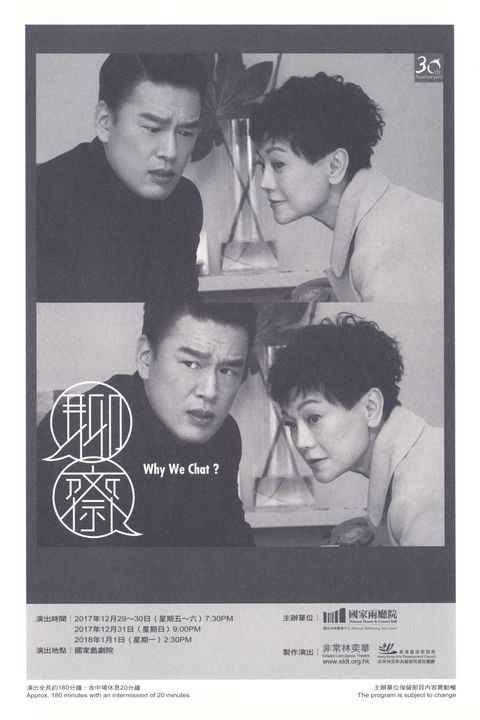
非常林奕華《聊齋》
Why We Chat ?
基本資料
2017-12-29
2017/12/29-2018/01/01
人生充滿一廂情願,它們每多來自我們對自己的想像,繼而產生對自己和他人的投影。這些想像,既是受外界的「有」所影響,也是被內在的「缺」所引發,但是反過來看,如果能夠認清外界的「缺」,善待內在的「有」,也許,就能不受重複又重複的輪迴之苦。蒲松齡以《聊齋誌異》中仙凡冥三界的愛恨情仇帶出生命的思考:進化,為何不等同改變,改變,為何又不能靠進化完成?就如科技再發達,為什麼人還是難免感慨,春宵苦短,壯志難酬,幾多徒勞,此生虛度?
Our lives are full of wishful thinking, mostly deriving from our imaginations toward ourselves as well as the subsequent reflections of ourselves and others. These imaginations are influenced by the “being” from without and meanwhile induced by the “not being” from within. However, if we look at it the other way round, that is, to realize the “not being” from without and treasure the “being” from within, perhaps we can be exempted from the suffering of repeated reincarnations. In Liaozhai Zhiyi (Strange Stories from a Chinese Studio), Pu Songling illustrates the intertwined love and hate in the worlds of gods, mortals and ghosts to present his philosophy of life: Why is evolution not equal to change? Why can't change be achieved by revolution? With technologies being so advance nowadays, why do human beings still lament good moments being too short, aspirations failing to fulfill, efforts going in vain, and lives being wasted?
典藏單位:國家兩廳院,實體文物請至兩廳院表演藝術圖書館申請觀看。
媒體類型:紙本

評分
 電話:02-3393-9798 ︳傳真:02-3393-9798 ︳地址:100011 臺北市中山南路 21-1 號
Copyright ©國家表演藝術中心數位典藏系統 版權所有 All rights reserved.
電話:02-3393-9798 ︳傳真:02-3393-9798 ︳地址:100011 臺北市中山南路 21-1 號
Copyright ©國家表演藝術中心數位典藏系統 版權所有 All rights reserved.