
 檔案1
檔案1
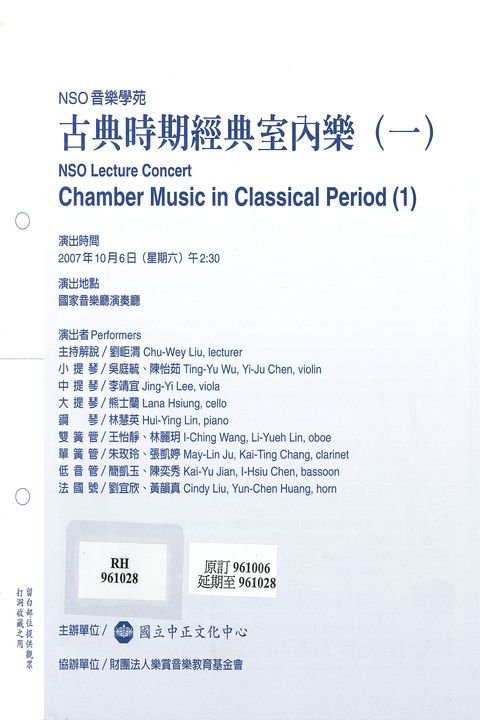
NSO音樂音苑:古典時期經典室內樂(一)
Chamber music in classical period (1)
基本資料
2007-10-28
2007/10/28
室內樂大約在14世紀就已經存在, 16、17世紀前,通常在王侯的宮廷娛樂活動方才有機會欣賞,18世紀後才漸盛行於民間。有人說室內樂難懂,也許他們只是不明白室內樂的表達形式,或它所要陳述的私密內容。當您打開解讀室內樂之門,這種傾談般的音樂,將會成為您最貼心的心靈夥伴。台灣古典音樂傳道士-劉岠渭教授,搭配 NSO 演奏好手,將於此系列三場解說音樂會中 ( 10/6、11/17及12/22 ) ,深入淺出的為您逐一剖析室內樂精妙之處,引導您進入古典時期經典作曲家海頓、莫札特與貝多芬室內樂的唯美天地。
The origin of chamber music dates back to the 14th century and was only performed for palace nobles prior to the 16th and 17th centuries. The general public wasn't afforded its beauty until the 18th century. Some say that chamber music is difficult to grasp. However, it could be their inability to understand the form of expression or the intimate message that chamber music seeks to convey. Together with the members of the National Symphony Orchestra, Professor Liu leads us into the beautiful world of chamber music with works by Haydn, Mozart, and Beethoven in the three Chamber Music of the Classical Period lectures (10/6, 11/17 and 12/22).
莫札特:小提琴與鋼琴奏鳴曲, K.304,第一樂章
貝多芬:第七號綱琴三重奏《大公》,第二樂章
海頓:絃樂四重奏《十架七言》,第二樂章 Grave e cantabile
莫札特:小夜曲, K.388,第一樂章
MOZART: Sonata for Vio1in and Piano, K. 304, 1st Mov.
BEETHOVEN: Piano Trio No. 7 Erherzog, Op. 97, 2nd Mov.
HAYDN: String Quaret The Seven Last Words of Jesus Christ, Op.51, 2nd Mov.-Grav e cantabile
MOZART: Serenade, K.388, 1st Mov.
典藏單位:國家兩廳院,實體文物請至兩廳院表演藝術圖書館申請觀看。
媒體類型:紙本及電子檔

評分
 電話:02-3393-9798 ︳傳真:02-3393-9798 ︳地址:100011 臺北市中山南路 21-1 號
Copyright ©國家表演藝術中心數位典藏系統 版權所有 All rights reserved.
電話:02-3393-9798 ︳傳真:02-3393-9798 ︳地址:100011 臺北市中山南路 21-1 號
Copyright ©國家表演藝術中心數位典藏系統 版權所有 All rights reserved.