 檔案1
檔案1
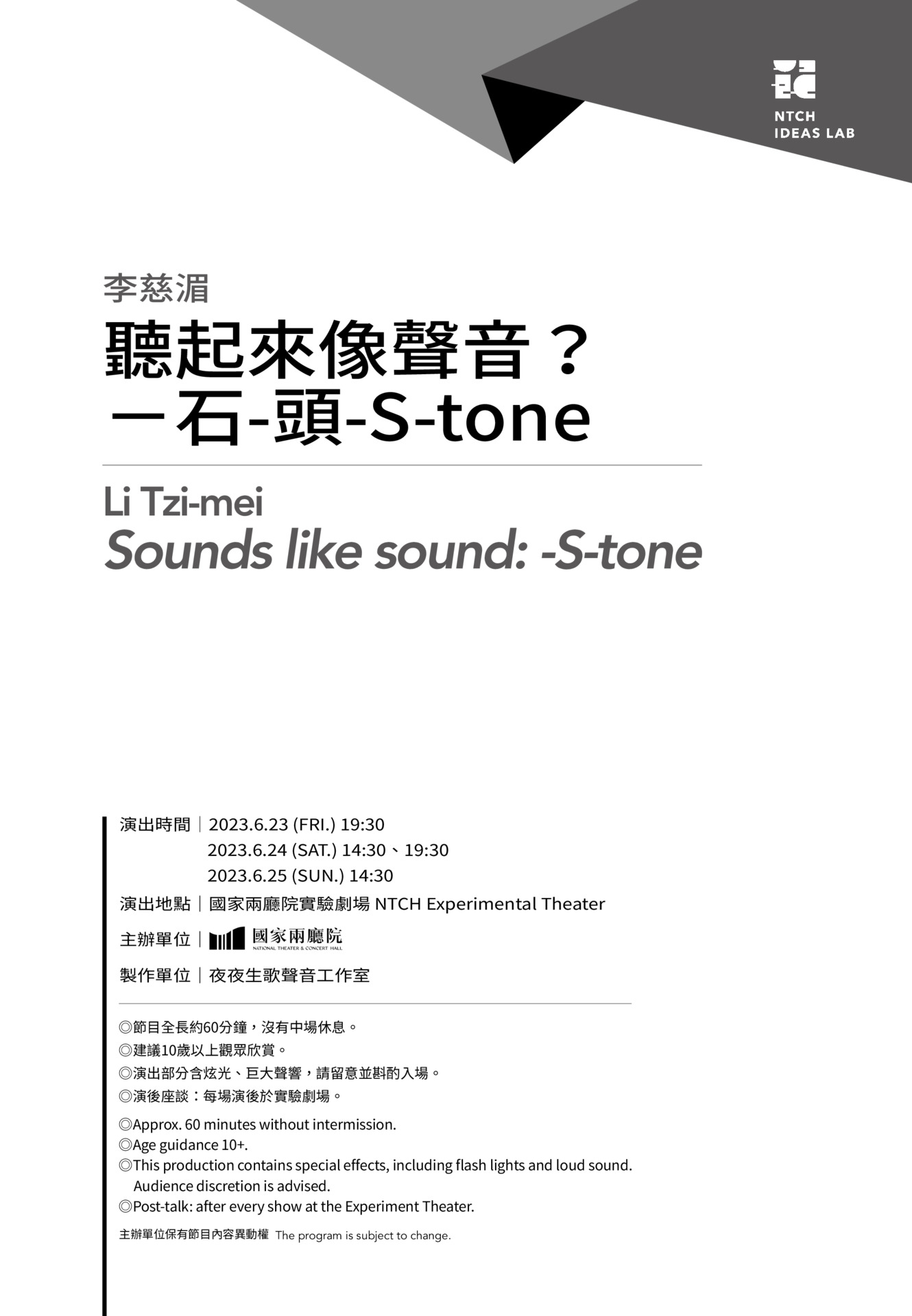
2023新點子實驗場 李慈湄《聽起來像聲音?-石-頭-S-tone》
Sounds like sound : -S-tone
基本資料
2023-06-23
2023/06/23 07:30
2023/06/24 02:30
2023/06/24 07:30
2023/06/25 02:30
前言
「新點子實驗場」作為兩廳院孵育創作者的展演平臺,鼓勵創作者以實驗精神突破想像,挑戰演出新形式。2019 年兩廳院更啟動「新點子實驗場 R&D 計畫」,透過公開徵選、創作陪伴、階段性呈現,最終完整製作的過程,支持創作者在發展階段研發創作方法、深化作品目標,讓創作以自由實驗的精神反覆辯證,開拓作品的思考維度。
今年「新點子實驗場」以表達對不滿事物難以言喻、無奈情緒的新世代流行語「emo」作為五檔作品探問社會的共通詞彙,五位藝術家在劇場中對於當代社會、視覺感官、勞動身體、國家體制、千禧世代等不同現象對世界發聲。
五檔節目中包含兩檔「2022 年新點子實驗場 R&D 計畫」入選作品:李慈湄透過聲音特徵和音樂性,探討聽覺、勞動身體與感官之間關係的《聽起來像聲音?-石 - 頭 -S- tone》;李奧森描繪警察在層層疊加的系統性暴力及其所處高壓環境,如何影響其內在狀態的《切割、破裂、凝聚、碾碎、警察》。另三檔邀請作品:李憶銖的《昆蟲物語:裝死》延伸法布爾《昆蟲記》中的篇章,以黑色喜劇展現人類的夾縫求生;張可揚與視障舞者及明眼舞者共創非視覺舞蹈,透過《在大道與廣場之間遇到一頭大象》挑戰無法看見的舞蹈如何被感知與理解;《跳躍少年》由趙偉丞以青少年社會事件出發,從日本動漫、臺灣流行文化等集體記憶切入,關注千禧世代的成長經歷。
新點子,不只是靈光乍現,更是勇敢提問世界的大無畏實驗精神。
創作者的話
李慈湄
這些問題我可能已經思考很多年,直到現在才能稍微表達清楚。也可能畢竟我是用文字在表達,所以說出來的話總是不盡完善。
聲音的敘事性是什麼?在哪裡找到它?在什麼樣的條件之中才能打開它?它能幫助我們什麼?
在普世當代,聲音的敘事性,大多被收進符號裡,就像視覺敘事很容易被收在象徵裡。譬如警報、訊號聲表示危險和提醒,腳步聲表示有人來過。我們把什麼東西都編織進一整個文明,並且朝向越來越整齊單一,以便於效率與管理。聰明的人掌握了編碼的秘密,也掌握了運用秩序帶來的權力。
如果說技術物延伸了人,我們藉以延伸出文明,這樣關於延伸、征服或支配的故事,我們說了很多。我很想回頭問問關於人的問題。我想要換個方式,問問我們同樣被支配的耳朵這個問題。它們也許有不同的話想說。
耳朵要打開。在原始時代,這能讓我們免於洪水猛獸。現在和未來,它能讓我們記起我們曾經都擁有,但現在看不到也說不出來的事情。
作品介紹
這個作品關於人與資源、技術與其背後的推動力,以及怎麼用聲音重新看待人與這一切的關係。
作品的結構是幾個不同的樂章,每個樂章有幾首曲目。每個曲目都是由現場演員的身體、發出的聲音、製作的音樂、聲響、燈光及視覺畫面等一切律動共同製造。
我們最初嘗試用語言表達,但文字本身的思維卻引領我們走向一貫的思考。所以我們將文字還原為語音,然後是聲音。這些還原成語音的聲音為我們開啓不同的方向。
聲音能表達時間、空間,聲音能表達感受、情境,也能表達概念與情感。音樂的表達性廣納百川,在人類理解與感受的普遍性下,也能容納不同的解讀。而這些,不需要很深奧的腦袋,就能體會。
與臺灣最有關的資源,其中就有在大戰後推動臺灣走向現代化的煤礦。開採煤礦是一個生存上極為艱難的狀態,不只在勞動現場,也包含工人的生存處境。在礦坑工作的聆聽環境難以想像,但它和採煤一樣,其實都離我們並不遙遠。我們現在享受的交通、建設、便利,也都建立在其上。
其實離我們不遠的東西,卻遠到難以想像。我想這個作品也是關於,在我們建立起來的事物之上,我們失去了什麼?
創作團隊
主要創作者、概念策畫、作曲:李慈湄
臺灣聲音工作者、電子音樂創作人、劇場音樂設計、DJ,並主持夜夜生歌聲音工作室,推廣臺灣電子音樂聲音。與劇場合作聲響設計多為關注臺灣社會議題、生命處境及傳統文化當代性相關之主題。
劇場合作作品《群眾》於 2019 年榮獲第十八屆台新藝術獎表演藝術獎,合作出版的電音專輯亦雙料入圍金音創作獎最佳電音專輯獎及最佳電音單曲獎。
近年來主持聲音計畫以探討聲音本質上的敘事性為主,意圖在當代社會意義符碼交織的語境尋求另一重解放,並以原子交換鏈電子音樂組織進行推廣。個人創作可見於新北市美術館、C-LAB 臺灣聲響實驗室等展覽及音樂節。
http://www.litzi-mei.com
研究顧問:鄭文琦
「數位荒原」計劃發起人(數位藝術基金會支持)。曾任「臺灣數位藝術知識與創作流通平台」主編(2006.1-2008.3)。2017年發起「群島資料庫」計畫迄今,致力於梳理臺灣與東南亞地區的共享歷史及其解殖作用。2020 年與新加坡 soft/WALL/studs 共同籌劃「未來群島工作坊」。曾在高森信男策劃的《秘密南方:典藏作品中的冷戰視角與全球南方》中展出「文獻 F:群島資料庫」(2020)。現為獨立研究者,最新計畫是與吳其育等合作的《南方宇宙生存指南:遊記、未來書寫與殖民地》(2022)。
戲劇顧問:王世偉
從主修導演,至研讀戲劇理論,再回到劇場創作。2020 年,以《群眾》獲得第十八屆台新藝術獎表演藝術獎的殊榮。目前積極開拓跨域合作,透過材質實驗與不同的藝術家合作,運用實驗性的美學形式和辯證性的思維處理當代議題、拆解權力結構,發展出回應時局的表演創作。近兩年推出導演作品:《爭》(代藝室)、《壵》(真快樂掌中劇團)、《虛擬日常》(噪音印製),也以戲劇構作身分與跨領域藝術家合作:《去你的島》(微光製造)、《掰》(真快樂掌中劇團)。
協同作曲:廖海廷
從擊樂手身分出發的創作者,專注於跨域的聲響呈現。
以詮釋現代音樂作品為中心,沿著當代音樂發展的脈絡,延伸至對聲音的熱愛。
近年專注於模組合成器、自然聲音取樣及原聲樂器的融合,透過劇場式聲響演出、專輯製作、現場聲音表演和跨域合作來實踐創作理念、探索各種發聲可能和聆聽的多樣性。
現居臺北,噪音印製發起人、Ableton Live 認證講師、音樂/聲音工作者。
燈光設計:劉柏欣(小四)
臺灣臺北人,英國皇家威爾士音樂戲劇學院劇場燈光設計碩士(Royal Welsh College of Music and Drama, UK),現為自由接案之劇場燈光設計。設計作品類型廣泛,涵蓋戲劇、舞蹈、音樂劇、偶戲、傳統戲曲等,近年作品:臺北海鷗劇場《國姓之鬼》、《化作北風》、兩廳院秋天藝術節《寫給滅絕時代》、三缺一劇團《LAB3.14:動物的無限循環》、飛人集社《THE 浮浪貢 OF 龍興46》、果陀劇團《解憂雜貨店》、明華園天字戲劇團《潮水孤蟾》、莎妹劇團《物種大樂團》、國光劇團《天上人間李後主》、黑眼睛跨劇團《戰場上的野餐》、再拒劇團《明白歌》、《春醒》、前叛逆男子《利維坦》、《新社員》等。
舞臺空間設計:林欣伊
畢業於國立臺北藝術大學劇場設計學系。設計作品領域涵蓋劇場舞臺設計、影視美術、視覺與形象設計及各式空間設計。近期劇場作品:2023TIFA《藝術之子》、2022頑劇場《月亮媽媽》、驚喜製造《落日轉運站|微醺列車》、2022 秋天藝術節《寫給滅絕時代》、2022 臺北藝術節《萬里尋親記》、《媽與她與他與它:媽組人生》、2022 超親密小戲節《包棟:雲門劇場》空間設計等。
影像設計:PosakJodian
生活於臺北的阿美族人。Posak 是名字,Jodian 是父親之名。Posak 有著民族語言與傳播學背景,並主要以影像作為方法,及自身的族群身分為起點,透過長期的田野研究關注部落的傳統領域形塑,以及離鄉原住民的都市生活;同時參與於各群眾運動的場景中,以及青年在城市縫隙間的各種行動可能。試著透過族群與文化行動作為支點,拉開身分與認同的邊界。Posak 的影像作品可見於不同類型的形式與媒介,近期作品包含:打開-當代藝術工作站《Lakec》(2018年,「邊境旅行 PETAMU Project」聯展),台 東 美 術 館《Lakec: A Very Simple River》(2022 年,「另一座板塊」聯展),本事藝術《Misafafahiyan 蛻變》(2022 年,「海洋與詮釋者」聯展)。亦是半路咖啡以及台灣海筆子成員之一。
服裝設計:蔡浩天
實踐大學設計學院服裝設計學系畢業,於 2015 年 10 月成立個人品牌工作室ERICHAOLIC 豐織設計,除了個人時裝品牌經營,也多方涉略服裝設計合作案,擅長多層次的剪裁、質料實驗與大膽配色,展現獨特服裝語彙。近期服裝設計作品包括圓劇團《手路》、TIFA《Ita》、《Ari-Ari》、2022Pulima表演新藝站 – 巴奈《Calay》、壞鞋子舞蹈劇場《吃土》第一版與第二版、李銘宸《超級市場 Supermarket》、李貞葳《崩 – 無盡之下》、烏犬劇場《麻嗨猴》、品牌時裝系列《母島》。
演員:姚尚德
野孩子肢體劇場團長,肢體默劇表演者。《小丑不流淚》一書作者。
演員:王熙淳
小劇場學校畢業,參與製作多為著重田野調查和當代議題之作品。
近期參與作品:
2022 臺北藝術節,鬼丘鬼鏟《不知邊際、不知所謂事件》表演者
2022 臺北兒童藝術節,複象公場《回家》演員
2022 兩廳院「新點子實驗場 R&D 計畫」,李慈湄獨立製作《勞動的身體感官的幻肢:無根音敘事》演員
2022 差事劇團 EATI 東亞戲劇交流-福岡《竹藪中》演員
2022 測不準工作室《無托邦:一場思想實驗》前期共同創作
2022 再現劇團《落人之家》讀劇演員
演出製作群 Credits
主要創作者、概念策畫、作曲:李慈湄
研究顧問:鄭文琦
戲劇顧問:王世偉
前期文字創作:洪筱婷
演員:姚尚德、王熙淳
協同作曲:廖海廷
燈光設計:劉柏欣
舞臺空間設計:林欣伊
影像設計:PosakJodian
服裝設計:蔡浩天
技術統籌暨舞臺監督:藍靖婷
音響工程:賴韋佑
現場混音:李慈湄、賴韋佑、賀開泉
燈光技術指導:王芳寧
舞臺技術指導:葉岫穎
製作人:陳怡伶
研發期視覺統籌:羅仕東
視覺設計:林育全
影像紀錄:駱思維、陳韋勝
攝影紀錄:蔡之凡、林育全
製作單位:夜夜生歌聲音工作室
特別感謝:田孝慈、吳思鋒、周伶芝、林欣怡、鄭尹真、蘇泓賓、烏犬劇場
Prelude
As a platform for incubating performing artists, NTCH IDEAS Lab encourages creators to persevere in experimentation, indulge their imaginations, and embrace bold new forms of performance. In 2019, the NTCH launched the first IDEAS Lab - R&D program, inviting submission of project proposals, mentoring artists in the creative process, and providing opportunities for preliminary presentations leading up to final production. These measures support artists in the developmental stages of their works and help them to expand their creative methodologies and depths, allowing them to broaden their dimensions of thinking by experimenting freely while engaging in dialectical discourse.
The five productions of the 2023 IDEAS Lab will delve into various social issues, with each work touching on the common concept of "emo". This term, widely used among the new generation, captures the indescribable and powerless feelings experienced towards objects of discontent. Through their works, the five artists will voice their opinions on contemporary society, the visual sense, manual labor, governmental systems, and millennials, speaking to the world from within the theatre.
The five productions comprise two works selected in the 2022 IDEAS Lab - R&D program. Li Tzi-mei explores the relationship between hearing, manual labor, and senses in
Sounds like sound: -S-tone
by examining sound characteristics and musicality. Val Lee's
Severing, Fracturing, Uniting, Pulverizing, Policing
depicts the cumulative systemic violence faced by the police, the high-pressure environment that surrounds them, and the impact of these factors on their mental state. The other three invited works include Lee Yi-chu's
Souvenirs Entomologiques: Playing Dead
, an extension of the corresponding chapter in Jean-Henri Fabre's book and a dark comedy that demonstrates human's ability to survive between a rock and a hard place.
In Elephant in the ____,
Chang Ko-yang collaborates with dancers with visual impairment and dancers with normal vision to create a "non-visual" dance, seeking ways to enable perception and understanding of a dance that cannot be seen. Chao Wei-chen starts out from social incidents involving adolescents in
Jump Shonen
, delving into Japanese anime and manga, popular Taiwanese culture, and other such elements of our collective memory while following the millennials' experience as they grew up.
IDEAS Lab embraces not only fleeting strikes of inspiration; it seeks to experiment and ask bold questions of the world with fearless perseverance.
Creator’s Note
Li Tzi-mei
Perhaps I’ve been thinking about these questions for long, but not until now can I express them a little clearer. Or perhaps I can never make my thoughts understood perfectly, since I am using words to express myself.
“What are the narratives in sound itself ? Where do we search for them? Under what circumstances can we create a space for them? And what benefits do they do to us? “
In our modern world, most of the narratives of sounds are collected into the world of our semiotic system, just like the narratives of vision can as well very easily be put into a world of symbols. The alarm sounds signify danger or caution. Footsteps sounds mean someone passing by. We weave every perception into our entire civilization of homogeneity and unity, for the sake of efficiency and management. The wise ones master the secret of encoding, and thus predominate the power from order.
To say that “men are extended by technology objects, and thereby extend modernity “, that’s the story of extension, conquer, and domination we’ve been telling so much. I want to go back to the question about “men.” I’d like to ask this question in a different manner. A question for our ears – the auditory perceptions which are now ruled by meanings. Maybe they have different stories to tell.
Open our ears. In the past, that kept us from the threats to our life. Now or in the future, it will remind us of things we all once sense but cannot see or say anymore.
Synopsis
This is a work about human and resources, technology and the drive for it, and how we revisit the relation between them and humans, from the “listen point” of sound.
The structure of the work consists of different chapters, in which all include a few tracks. Every track is produced altogether by the body and voice of the performers, music and sounds we made, and the flow of lights or other visual elements.
At first, we try to work with words, but the logic of words leads us down an old path. So, we reduced the words into phones /voices, and then sounds. Those sounds open up new ways of senses for us.
Sound expresses time and space, feelings, and circumstances, it also carries concepts and emotions. The expressiveness of sound is limitless. Within the range of human perceptive universality, it can accommodate all kinds of understanding. We don’t need a very clever mind to relate to it.
Coal is one of the resources in Taiwan that propels us into modernism. Mining was an extremely difficult living status, whether it’s its working conditions, or it’s the living situation of the miners we’re talking about. The listening environment during mining is now hard for us to imagine. But it in fact is just like mining, not very far from us, nor long behind us. The traffic, the infrastructure, and the modernity we have now, are built on top of everything about it.
Things that were not long behind us, are now too far to imagine. I think, from this point of view, this work is also about “what have we lost when we stand on top of the things we build and own? “
Credits
Concept & Composer: Li Tzi-mei
Research Consultant: Tenn Bun-ki
Dramaturge: Wang Shih-wei
R&D Stage Text: Hung Shiau-ting
Performers: Yao Sun-teck, Wang Hsi-chun
Composer in Collaboration: Liao Hai-ting
Lighting Design: Liu Po-hsin
Space&StageDesign: Lim Xing-yee
VideoDesign: Posak Jodian
Costume Design: Tsai Hao-tien
Technical Coordinator & Stage Manager: Lan Chin-ting
Sound Engineer: Lai Wei-yo
Live Mixing: Li Tzi-mei, Lai Wei-yo, Ho Kai-quan
Master Electrician: Wang Fang-ning
Master Carpenter: Yap Siew-yin
Producer: Chen Yi-ling
R&D Visual Coordinator: Lo Shih-tung
Graphic Design: Lin Yu-quan
Videographer: Luo Sih-wei, Chen Wei-sheng
Photographer: Tsai Zhi-fan, Lin Yu-quan
Production: Midnight Sound Maker
Very appreciate for your feedback! This is an online questionnaire:
Online Questionnaire
《聽起來像聲音?-石-頭-S-tone》
"Sounds like sound : -S-tone"
典藏單位:國家兩廳院
媒體類型:電子檔

評分
 電話:02-3393-9798 ︳傳真:02-3393-9798 ︳地址:100011 臺北市中山南路 21-1 號
Copyright ©國家表演藝術中心數位典藏系統 版權所有 All rights reserved.
電話:02-3393-9798 ︳傳真:02-3393-9798 ︳地址:100011 臺北市中山南路 21-1 號
Copyright ©國家表演藝術中心數位典藏系統 版權所有 All rights reserved.