 檔案1
檔案1
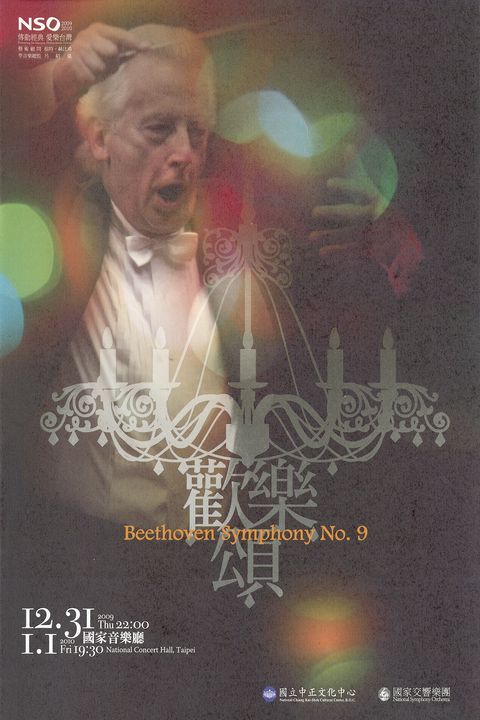
歡樂頌
Beethoven Symphony No. 9
基本資料
2009-12-31
2009/12/31-2010/01/01
貝多芬:《合唱幻想曲》
《合唱幻想曲》是一部集鋼琴、管絃樂與人聲的作品。作晶中貝多芬展現豐富的樂思,將著名的「快樂頌」主題發展將近20分鐘的單樂章作品;以鋼琴為主奏,管絃樂團伴奏,最後三分多鐘再融入完美的人聲合唱。相較於第九號交響曲長度,《合唱幻想曲》顯得更為精練。
根據資料顯示,貝多芬曾經受到一位法國作曲家梅瑜爾 ( Nicolas Etienne Mehul, 1763-1817 ) 作品一 《1800年7月14日國慶頌歌》 ( Chant National du 14 Juillet, 1800 ) 的啟示,梅瑜爾的作品是一首D大調附人聲合唱的管絃樂曲, 先有一段很長的器樂序奏,接著人聲唱出基本旋律,再就此旋律做各種變奏。而貝多芬的第九號交響曲則為D小詞,其終樂章的發展大體上也是如此。在這首《1800年7月14日國慶頌歌》與《合唱》交響曲之間,貝多芬於1808年完成了C大調的《合唱幻想曲》,因此很可能《合唱幻想曲》就是第九號交響曲的「熱身」或實驗性作品。
樂曲一開始是一段很長的幻想曲風格的鋼琴獨奏樂段,帶出管絃樂的部分之後,逐漸進入高潮。首演時,因為時間緊迫,鋼琴獨奏的樂段尚未完成,貝多芬只好親自上台以即興的方式演奏,音樂會後才完成獨奏的樂段。
鋼琴獨奏之後,法國號以宣告式的音型和雙簧管呼應,接下來,再度由鋼琴彈奏一段稚趣的主題,旋律是取自貝多芬在1795年所寫的一首以愛情為主題的藝術歌曲《回報的愛》 ( Gegenliebe ) 。按著,以這個簡單清純的旋律展開一段自由的變奏。最後選用了克里斯多夫‧庫夫納 ( Christoph Kuffner ) 的詩〈當愛情與力量化為一體〉 ( Wenn sich Lieb und Kraft vermahlen ) 作為歌詞放在合唱當中。
貝多芬:第九號交響曲《合唱》
合唱交響曲在音樂史上的地位崇隆高偉,無與倫比,不但兼具了藝術性、娛樂性,不但是偉大的音樂,更是政治的象徵,同時也具有極高的商業價值。無論是首度將合唱與人聲加入交響曲的編制中,或是樂曲本身的龐大且偉大結構、優美動聽的「合唱」樂曲旋律、四海一家的創作動機與樂曲內涵,它都堪稱有史以來最偉大的作品。
此曲除了作為1990年東西德統一柏林圍牆倒塌峙的慶祝樂曲,也被選為歐洲共同體的會歌,2001年9月4日,聯合國教科文組織也將柏林國立圖書館收藏的《第九號交響曲》手稿列入「世界記憶名錄」當中。
2003年,樂曲的手稿,在倫敦的蘇富比拍賣行,以330萬美元的天價售出。正如蘇富比的手稿部負責人史提芬路博士 ( Dr‧ Stephen Roe ) 指出這是人類的一大創舉,足以和莎士比亞的《王子復仇記》和《李爾王》平起平坐。」此外,本曲還被運用於電影《終極警探》 ( Die Hard ) 最後一幕正義戰勝邪態的配樂,及其總集《終極警探3》 ( Die Hard wirh a Vengeance ) 中。電影《發條橘子》、《修女也瘋狂II》、《鋼琴師》、《春風化雨》也可聽到它的蹤影, 而貝多芬的傳記電影《永遠的愛人》,自然也少不了它,用以呈現貝多芬幼年獲得的短暫自由。世界各地許多重要的慶典場合也多以它為烘托氣氛的配樂。凡此種種,都再再顯示這首作品的不凡價值。
而為了制止駕駛人在停車場睡覺,英格蘭中部城市史托克一處停車場,甚至決定二十四小時播放貝多芬第九號交響曲。由於部分駕駛人開車開累了,常把車開到停車場、隨便一停就睡了,影響其他人的使用權利。為此,位於英國史托克市約翰街的一處多層停車場,因此決定續放貝多芬第九號交響曲,藉自由子多變的音高和節拍,干擾那些在停車場亂停車睡覺的駕駛。同時也可以疏緩工作人員及其他駕駛人的緊張情緒。
貝多芬在第九號交響曲的標題上題記有「以席勒的快樂頌為終曲的交響曲」,直接點出了此曲的創作根源。此曲首度將聲樂運用於交響曲中,拓展了交響曲的表現力,為音樂史上的創舉,然而它的重要性卻不僅是在音樂史上的地位,更在於它深刻揭示了四海一家的博愛理念,賦予音樂更大的使命感,成為人類精神文明的圖騰。象徵共產極權的柏林圍牆倒塌之後的慶祝音樂會,便自伯恩斯坦指揮多國樂團與合唱團演出這首《合唱》交響曲,演出時歌詞改為《自由頌》,除了表達自由的聖戰終於獲得勝利,更將此曲的重要性推向歷史的巔峰。
創作經過 1785年, 德國詩人席勒 ( J‧C‧F Schiller, 1759-1805 ) 在德勒斯登濱臨易北河的葡萄園中,寫作了這首以歡樂與愛為主題的詩篇《快樂頌》 ( An die Freude ( Ode to Joy ) ) 1792年貝多芬看到席勒的詩後,便決定要將席勒的詩放入自己的音樂作品中,當時他年僅21歲。從那時起,貝多芬應該已經開始構思第九號交響曲《合唱》了,後來得力於倫敦愛樂協會撥款五十英鎊之協助,終於1824年初才完成,前後構思共花了三十二年。《快樂頌》的原詩共有24節,但貝多芬只選取了其中的9節。
除了上述的《合唱幻想曲》,可視為第九號交響曲的習作,而在1812年時,貝多芬曾經計畫寫作第七、八號與另一首D小調交響曲,結果這首D小調交響曲也成了第九號交響曲的藍本。
1822年,貝多芬曾經表示要寫作兩首不同的交響曲,其一為D小調的第九號交響曲,其二為「德意志交響曲」。原本貝多芬打算將以《快樂頌》所寫成的歌唱部分,加入兩曲之一,但一直未能決定,此時《快樂頌》的合唱部分已經接近完成。到了1923年貝多芬才開始積極寫作第九號交響曲,隔年2月完成全曲。
貝多芬寫作這首交響曲時,兩耳早已經全聾,同時也有胃腸病與黃疸病,當時歐洲正籠罩在政治與經濟的不安陰影中,然而貝多芬還是譜出了這首壯麗明快,且充滿人道主義的歡樂之歌,令人不禁為他的理想與胸懷而感到敬佩。
此曲題獻給普魯士王費德烈-威廉三世,因為他曾贈送貝多芬一隻鑽戒,為了答謝他的好意,貝多芬便將此曲獻給他。1824年5月7日,第九號交響曲在維也納首演,貝多芬親自監督樂曲的進行,當樂曲奏畢,聽眾報以熱烈的掌聲,但是他由於耳聾的緣故,渾然不知,直到一位女歌者走到他身邊,輕拉他的衣袖,貝多芬才轉身接受眾人的喝采。
BEETHOVEN: Choral Fantasy in C minor Op.80 The Choral Fantasy is a piece written for piano, orchestra, and chorus. In this single movement work, Beethoven displays abundant musical talent by elaborating on the famous theme “Ode to Joy” for nearly 20 minutes. The piece consists of the piece the lead with the accompaniment of the orchestra, and an addition of a beautiful chorus in the final three minutes. Compared to Symphony No. 9, the Choral Fantasy appears to be a more condensed version. According to researches, Beethoven was once inspired by Chant National du 14 Juillet, 1800, a work by French composer Nicolas Etienne Mehul (1763-1817). Mehul's piece in D major brought together chorus and orchestra, beginning with a long instrumental prelude followed by a chorus singing a basic melody. The melody is then made into many variations. Beethoven's Symphony No. 9 in D minor has a similar development in the final movement. The Choral Fantasy in C major completed in 1808, came after Mehul's Chant National du 14Juillet, 1800 and before Beethoven's Symphony No. 9, and therefore has been said to be a “precursor"" or experimental piece of Symphony No. 9. The piece opens with a lengthy fantasia-style piano solo introducing the orchestra which gradually leads to the climax. Due to time constraint, the piano solo had not been completed before the premiere and Beethoven personally improvised this section duting its first performance. The solo was then completed after the concert. Following the piano solo is a call-and-response section between the French horns and oboes; the piano then plays a child-like theme, a melody taken from Gegenliebe, an artistic love song written by Beethoven in 1795. The piece then continues with free variations of this simple musical theme. At the end Beethoven used Christophe Kuffner's poem “Wenn sich Lieb und Kraft vermahlen” (When love and strength are united)as the lyrics of the chorus. BEETHOVEN: Symphony No. 9 in D minor Choral, Op. 125 The status of Symphony No. 9 in music history is highly valued and incomparable. The masterpiece has both artistic and entertaining values. It is a grand piece of work with political significance, and a work that has brought great commercial value. It is proclaimed to be the greatest work in history due to the s significance of the very first attempt at using voices in a symphony, the grandeur structure of the musical composition itself, the beautiful and pleasant melody of the “choral,” or the composer's concept of brotherhood in mankind and connotations of the music. This piece was not only used to celebrate the fall of the Berlin Wall in 1990, but also chosen as the anthem of the European Community. In September 4th 2001 , the manuscript of Symphony No. 9 held by Berlin State Library was inscribed on UNESCO's Memory of the World Register. In 2003 the manuscript was sold for 3.3 million U.S. dollars in Sotheby's, London. Dr. Stephen Roe, the Head of Department Printed and Manuscript Music of Sotheby's stated,”It is one of the highest achievements of man, ranking alongside Shakespeare's Hamlet and King Lear.” In addition, this musical piece was also adopted in the last scene of the motion picture film Die Hard when justice wins over evil. It is also found in the third installment Die Hard with a Vengeance. We can find traces of Symphony No. 9 in other films like A Clockwork Orange, Sister Act 2, Shine, and Dead Poets Society. The music naturally appeared in Immortal Beloved, a fi1m about Beethoven's life and death, to depict the short freedom Beethoven had in his younger years. Many celebration occasions around the world choose to use Symphony No. 9 to create a jolly atmosphere. Such examples show the extraordinary value of this work. In order to prevent drivers from sleeping in their cars in the John Street car park, a multi-story car park in Stoke-on-Trent, a city in central England, the city administration decided to play Beethoven's Symphony No. 9 around the clock. It a11 started when some drivers tired from driving drove to the car park to take a nap. However this affected other people's right to use the facility. Due to this reason Beethoven's Symphony No. 9 was chosen to disturb drivers from sleeping using the song's high-pitched sounds and rhythms. At the same time it helped ease the tense mood of the staff and drivers at the car park. The title of Beethoven's Symphony No. 9 has the words “With Final Chorus on Schiller's Ode to Joy” written on it, an obvious indication of where its inspiration originated from. It was the first ever to use vocal voices in a symphony, which broadened the expression of symphonies and became a great achievement in music history. The significance of Symphony No. 9 is not merely its position in music history, but the profound message of universal brotherhood it conveys. It has given music a bigger responsibility and become the symbol of spiritual civilization in mankind.The piece was conducted by Leonard Bernstein to celebrate the fall of the Berlin Wall, an icon of Communism. The concert was performed by an orchestra and chorus made up of many nationalities and the lyrics “Joy” were replaced with “Freedom” to express the final victory of freedom. With this, the significance of Symphony No. 9 reached the peak in history. Composition In 1785, German poet J. C. F Schiller (1759-1805) completed “An die Freude” (Ode to Joy), a poem about joy and love, in a vineyard in Dresden next to River Elbe. Having read Schiller's poem in 1792, Beethoven made plans to set this poem in his music at the age of 21. From then Beethoven began to conceive the making of Symphony No. 9, which took him 32 years to finish. The work was finally completed in the beginning of 1824 under the auspices of the Philharmonic Society of London with a fund of 50 pounds. “The Ode to Joy” originally had 24 sections in which Beethoven had only chosen nine. Besides the Choral Fantasy being regarded as an exercise of Symphony No. 9, Beethoven planned to write his Seventh and Eighth Symphonies and another symphony in D minor in 181 2. This symphony in D minor then became the blueprint of Symphony No. 9. In 1822 Beethoven indicated that he wanted to compose two works, a symphony with a choral finale, and a purely instrumental work in D minor. Beethoven had originally planned to put the vocal part of “Ode to Joy into” one of the two pieces, but could not make the decision. At this time the chorus of “Ode to Joy”was nearly completed. It was not until 1823 that Beethoven decided to combine the two ideas into one symphony, symphony No.9.The piece was completed in February the following year. Beethoven was completely deaf when writing Symphony No.9 and suffered from inflammatory bowel disease and jaundice. In addition the political and economical situations of Europe at that time were unstable; nevertheless, Beethoven created a glorious and lively piece of music full of humanity and joy. One can’t help form admiring his ideals and aspiration. Beethoven dedicated Symphony No. 9 to Frederick William III of Prussia to thank him for a diamond ring gift. On May 7th 1824, Symphony No. 9 was premiered in Vienna and Beethoven directed the piece himself.
貝多芬:《合唱幻想曲》
貝多芬:第九號交響曲《合唱》
BEETHOVEN:Choral Fantasy in C minor Op.80
BEETHOVEN:Symphony No. 9 in D minor Choral, Op. 125
典藏單位:國家兩廳院,實體文物請至兩廳院表演藝術圖書館申請觀看。
媒體類型:紙本及電子檔
(演出人員過多,超出表格容量,故後段節錄於此)
雙簧管│楊舒婷│國家交響樂團
英國管│李明怡│國家交響樂團
單簧管│朱玫玲│國家交響樂團
單簧管│張凱婷│國家交響樂團
單簧管│朱偉誼│國家交響樂團
單簧管│孫正茸│國家交響樂團
低音管│簡凱玉│國家交響樂團
低音管│陳奕秀│國家交響樂團
低音管│高靈風│國家交響樂團
倍低音管│簡恩義│國家交響樂團
法國號│劉宜欣│國家交響樂團
法國號│黃韻真│國家交響樂團
法國號│國田朋宏│國家交響樂團
法國號│黃任賢│國家交響樂團
法國號│王婉如│國家交響樂團
法國號│崔文瑜│國家交響樂團
小號│宇新樂│國家交響樂團
小號│陳長伯│國家交響樂團
小號│張景民│國家交響樂團
小號│吳建銘│國家交響樂團
長號│宋光清│國家交響樂團
長號│邵恆發│國家交響樂團
長號│陳中昇│國家交響樂團
低音長號│彭曉昀│國家交響樂團
定音鼓│連雅文│國家交響樂團
定音鼓│陳廷銓│國家交響樂團
打擊樂│陳哲輝│國家交響樂團
打擊樂│陳振馨│國家交響樂團
打擊樂│楊璧慈│國家交響樂團
豎琴│解瑄│國家交響樂團

評分
 電話:02-3393-9798 ︳傳真:02-3393-9798 ︳地址:100011 臺北市中山南路 21-1 號
Copyright ©國家表演藝術中心數位典藏系統 版權所有 All rights reserved.
電話:02-3393-9798 ︳傳真:02-3393-9798 ︳地址:100011 臺北市中山南路 21-1 號
Copyright ©國家表演藝術中心數位典藏系統 版權所有 All rights reserved.