 檔案1
檔案1
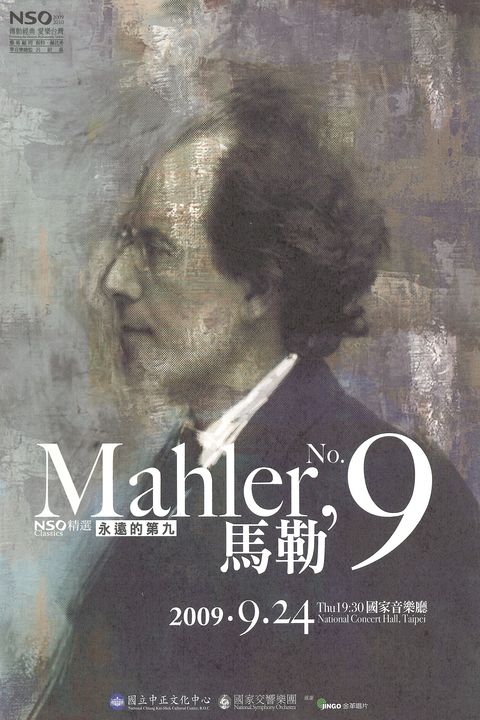
NSO精選:馬勒第九
Mahler, No.9
基本資料
2009-09-24
2009/09/24
不朽的第九-三位偉大作曲家的生命歷程 NSO 2009-10新樂季中,音樂顧問赫比希在選曲上,除了以布拉姆斯與他的音樂前輩舒曼、孟德爾頌為主軸之外,還特別安排了貝多芬、布魯克納與馬勒這三位德奧偉大交響曲作曲家的第九號交響曲,並且這三首樂曲都是由他親自指揮,這樣的安排其實際含著許多層面的意義。從交響曲的發展上來看,這三位作曲家都具有極為重要的地位,他們的第九號交響曲,也都被視為偉大與不朽的傑作。然而,拋開樂曲的內容,這三位作曲家的交響曲創作都止於第九,布魯克納甚至未能完成第四樂章即與世長辭,在音樂史上如舒伯特德、弗乍克佛、漢威廉士等作曲家的交響曲也都止於第九,馬勒所忌諱的「第九的魔咒」似乎真有其事。
其實,在音樂史上創作了第九後並未完成第十號交響曲的作曲家,從貝多芬到二十世紀的大師許尼特克 ( Alfred Schnittke ) 不超過二十位,也就是從十八世紀交響曲形式確立至今的千百位交響曲作曲家中,符合所謂「第九的魔咒」而招至死神眷顯的作曲家是極小的比例,要將作曲家的死亡與第九交響曲畫上等號有點牽強。或許「第九的魔咒」只能當做音樂愛好者們欣賞音樂的一個話題吧!不必太認真。
拋開「第九的魔咒」無論是從苦難中超脫昇華為全人類的博愛的《貝多芬第九》,或是在病痛中的深刻信仰的體認與謝恩的《布魯克納第九》,乃至於對豐富而多變生命的眷戀與告別的《馬勒第九》,在音樂內容上其實有著前後的連結與傳承。在調性上《貝多芬第九》與《布魯克納第九》是 d 小調,布魯克納明顯地呼應著貝多芬的調性安排,布魯克納生前就意識到未能完成第四樂章,原來還計畫引用完成的宗教合唱曲《謝恩讚美詩》 ( Te Deum ) 作為終樂章,但是因為調性 ( C大調 ) 不符而作罷,由此可見《貝多芬第九》是布魯克納最後一首交響曲的典範與理想。將慢板與該諧曲樂章對調,並且《布魯克納第九》第二樂章中大膽的和聲運用與民謠舞曲的風格,與《貝多芬第九》第二樂章中大膽的定音鼓音響與中間樂段民謠風的旋律也遙相呼應。作為「向生命告別」的第三樂章慢板,將作曲家 “Dem 1ieben Gott”〈獻給全心所愛的上帝〉將病痛與死亡的威脅昇華為純淨與安詳的信仰與愛之滿足,與《貝多芬第九》第三樂章中那種一生與多辨的命運爭鬥,最後在宗教的博愛中窺見天堂的心境,同樣發揮了感人至深的力量。
《馬勒第九》也被認為是一首「告別」之作,指揮大師孟格堡 ( Willem Mengelberg,1871-195 1 ) 曾經以個人的體認為這首交響曲的四個樂章下了以下的註解第一樂章向其摯愛〈妻子與孩子〉告別。第二樂章:死亡之舞。第三樂章絞刑架上的玩笑一工作、奮鬥一切徒勞躲避死亡之功。第四樂章馬勒的靈魂對世界告別之歌。這當然是較誇張與主觀的詮釋,但是曲中的「告別」 ( Leb’ wohl ) 內涵較《大地之歌》更為強烈與具體,它與《布魯克納第九》同樣由一個綿長的慢板樂章開始,同樣有著諧麓的「死之舞」 ( Totentanz ) 般的第二樂章,以及同樣在開頭小提琴以G絃大幅度上行滑音作為引子的慢板終樂章。我們不必把這些看成是馬勒對布魯克納的模仿,因為這些手法在其他馬勒交響曲中也曾出現。或許這是一種傳承,在他們對貝多芬乃至華格納作品的景仰中,得到了類似的啟迪,又再以自我個性的音樂語法將它們呈現。布魯克納仍然運用絃樂弱音的顫音,以及管風琴般的宏偉樂團齊奏建構他的交響世界。馬勒則以複雜的對位旋律線條與繽紛的管絃樂手法,呈現他複雜而矛盾的內心世界。馬勒在第一樂章開頭勾勒的「四音動機」,雖然不似他在《大地之歌》結尾引用貝多芬告別奏鳴曲中的「告別動機但是精神上與「告別動機」有異曲同工之妙,由豎琴撥出的「四音動機」那種晚鐘般的音響,與小提琴下行二度的主題旋律完美的呈現了告別的意涵。
同樣在面臨或思考生命與死亡的時刻,三位作曲家在不同的時間背景之下譜寫出了生命中的「第九在2009年的晚秋到歲末,由國家交響樂團在不同的音樂會主題中呈現,在今年 11月30日即將度過 78歲生日的赫比希指揮,將呈現給台灣聽眾一種怎樣的生之況味,我將以沉靜而肅穆的心情期待者,與享受著。
Timeless Ninths:The life journeys of three great composers In the NSO's 2009-10 season, Artistic Adviser Gunther Herbig has selected three Symphonies No. 9 from three great Austro-German composers, Beethoven, Bruckner and Mahler, in addition to the repertoire mainstay of Brahms, Schumann and Mendelssohn. He will also be conducting these compositions. This arrangement, in fact, has several implications. These three composers are significant in the development of the symphony and their ninths are also considered great and timeless masterpieces. However, their ninth symphonies were their final symphonic works. Bruckner even passed away before the completion of his fourth movement. In addition to them, Schubert, Dvorak and Ralph Vaughan Williams are also prominent examples of “the curse of the ninth” which deeply troubled Mahler. As a matter of fact, there are no more than 20 composers who didn't live to complete their tenth symphonies after the ninths from Beethoven's time to the 20th century maestro Alfred Schnittke. That is to say that the number of composers who suffered the curse compared to the total pool of composers since the form of the symphony was established in the 18th century is relatively small. As a result, it is a bit farfetched to equal death with the ninth symphony. Perhaps the curse of the ninth can best be seen as a casual topical subject for music lovers. There is a strand of interrelation and legacy among Beethoven's Ninth, featuring his universal love that derived from sufferings, Bruckner's Ninth, recognizing his religious faithfulness through illness, and Mahler's Ninth, an ode and a farewell to his beautiful life. In terms of tonality, Beethoven's and Bruckner's Ninths are both in D minor, suggesting that Bruckner echoes to the tonal arrangement of Beethoven. In the 1890s, Bruckner was aware that he might not live to finish his Symphony No. 9, and thus intended to use his Te Deum, a religious choir, as the finale. But he finally gave up the idea because the C major Te Deum didn't fit a D minor symphony. This shows that Beethoven's Ninth serves as the role model for Bruckner's last symphony. Besides, the Adagio and Scherzo switch places for both compositions. the use of harmony and folk dance in the second movement of Bruckner's Ninth responds to the timpani solo and the folk elements in the second movement of Beethoven's Ninth. Moreover, Bruckner called his third movement, “Farewell to Life” and he dedicated this symphony “to the beloved God” (in German,”dem lieben Gott”).In the third movement, the composer transformed the threats of illness and death to the satisfaction of faith and love. This heart-stirring power can also be seen in the third movement of Beethoven’s Ninth where he struggled with his eventful fate and finally espied Heaven through the universal love of religion. Mahler’s Ninth is also regarded as a “farewell”work. Conductor Willem Mengelberg(1987-1951) claimed that the first movement was Mahler’s farewell to his loved ones(Alma and his little girl), the second movement was the “Dance of the Death”the third movement was what he called “Gallows humor”-work and effort, vain attempts to avoid death, and the fourth movement was the song of Mahler’s soul singing farewell, “from his innermost being.”This is certainly an interpretation of slight exaggeration and subjectivity but the Leb’s wohl (farewell)implication is stronger and more specific than that of Das Lied von der Erde.Mahler’s Ninth has several elements in common with Bruckner’s:the same Andante movement to begin with, the same To tentanz (Dance of Death)-like second movement, and the same Adagio finale that opens with the violin gliding on the G string. We don't need to see these as an imitation of Bruckner because they can also be seen in Mahler's other symphonies. Perhaps it is a kind of inheritance:Mahler and Bruckner were both inspired in a similar way by their admiration of works from Beethoven's to Wagner's times and then expressed them with their personal music language. Bruckner still used string tremolos and an organ-like grand orchestra to construct his symphonic world while Mahler resorted to counterpoint and coloration of the orchestra to present his complicated and contradictory inner world. The four-note motif used at the opening of Mahler's first movement differs from the farewell motif that he quoted from Beethoven's Piano Sonata No. 26 “Les Adieux” in the coda of his Das Lied von der Erde. However, the four-note motif and the farewell motif are different approaches to the same spirit. The four note's evening bell-like sounds by the harp and the violin's descending second theme melody perfectly convey the message of farewell. These three symphonists wrote their own ninth in different times and backgrounds when pondering upon the issue of life and death. Their masterpieces will be performed by the National Symphony Orchestra from the late fall to the end of 2009, under the direction of maestro Herbig, who will celebrate his 78th birthday on November 30th .I am looking forwards to the excitement and enjoyment that they are going to bring to the Taiwanese audience.
馬勒:第九號交響曲
MAHLER:Symphony No. 9
典藏單位:國家兩廳院,實體文物請至兩廳院表演藝術圖書館申請觀看。
媒體類型:紙本及電子檔

評分
 電話:02-3393-9798 ︳傳真:02-3393-9798 ︳地址:100011 臺北市中山南路 21-1 號
Copyright ©國家表演藝術中心數位典藏系統 版權所有 All rights reserved.
電話:02-3393-9798 ︳傳真:02-3393-9798 ︳地址:100011 臺北市中山南路 21-1 號
Copyright ©國家表演藝術中心數位典藏系統 版權所有 All rights reserved.