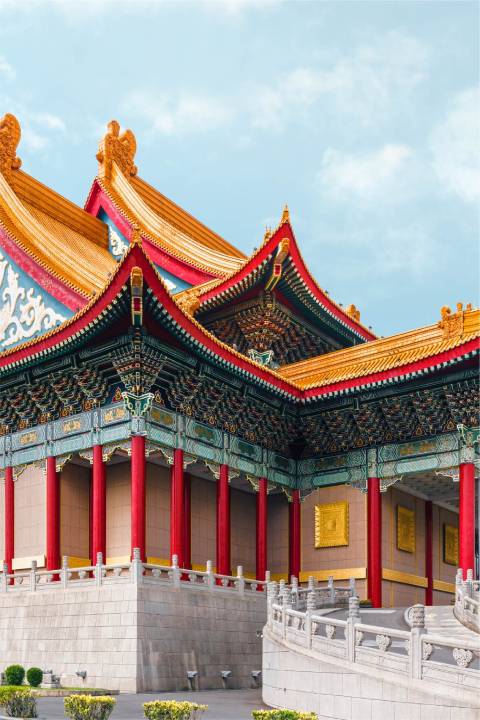
 檔案1
檔案1

臺灣國家國樂團王者系列:霸王別姬
Farewell My Concubine
基本資料
2009-06-12
2009/06/12
《十面埋伏序曲》 撰文 / 關迺忠
〈十面埋伏〉和〈霸王別姬〉是兩首著名的琵琶曲,分別從劉邦和項羽兩個角度來寫這場決定歷史過程的戰爭。我欽佩劉邦的雄才大略,我曾用劉邦的《大風歌》舖寫了我的交響詩《琴詠春秋》的第一樂章。但是從人格上講,我會更加把同情放在項羽這一邊。雖然歷史是無情的,但是一件藝術品卻是可以讓作者寄托他的無限情思的。所以我在寫這首名為《十面埋伏序曲》的曲中除了描述這場戰爭之外,也寫了戰爭帶給人們的苦難,更寫了在戰爭中失敗的項羽的愛和遺恨。
《楚漢》琵琶協奏曲 撰文 / 賴德和
為尋求一個寫作的切入點,我反覆聆賞,琵琶名家的演奏錄音,玩味諸家各異其趣的詮釋,聆賞時多做感性的投入,少做理性的解析,以期將自我心性融入原有古曲《十面埋伏》、《霸王別姬》的情境之中。
在實際配器運用上可分成下列各種組合:
(一)純國樂團的段落
(二)純管絃樂團的段落
(三)以國樂團為主,管絃樂團中的一個或多個樂器族群為輔;
(四)相反的以管絃樂團為主,國樂團中的一個或多個樂器族群為輔;
(五)木管、銅管、絃樂、吹管、彈撥、拉弦及擊樂全部七個樂器族群混合的總奏。
五種組合其中(一)與(二)兩種因為有許多既有經驗可資參考,就技術上而言比較容易掌握,其餘各項組合若遇垂直和聲式的結構時,不同的樂器族群最好處理成完整平衡的和聲體;若遇旋律的水平結構時,不同的樂器族都最好是同位不同階,同階不同層,更簡單的說不同樂器族群織體各異。
《楚漢》不是一首琵琶協奏曲。它是以音色及織體為經緯,由琵琶領奏,所有樂器及聲部皆為豐富、延伸及擴充原有琵琶的質素。至於文字不能盡表之處,就讓音樂本身來說話。
《霸王別姬》二胡與大提琴雙協奏曲 撰文/劉學軒
張愛玲版《霸王別姬》觸動我的心,聽梅蘭芳唱著〈虞歌〉,彷若跌入歷史河流中無法掙脫,超越時空的場景與對話在心中不斷吶喊著,也成了我與楚霸王、虞姬、梅蘭芳與張愛玲的多方對話。
開始以〈序-楚歌〉揭開序幕,項羽以淡淡的歌聲對於即將結束生命的自己所哼唱的悲歌。〈張愛玲〉標題樂段,她寫著:「啊,漢軍中的楚人這樣-這樣多麼?」〈楚漢〉標題段以軍隊威壯聲勢呈現。二次〈楚歌〉隨之而來的〈虞歌〉彷若為項羽打氣:「勸君王飲酒聽虞歌,解君憂悶」這是個短暫平靜的時刻。〈追隨〉唱出願隨大王東征西戰無怨無悔,此時〈楚歌〉再現,短暫〈訣別〉樂段後,楚霸王〈力拔山河〉為自己唱出時不我予的無奈。〈楚歌〉第四次出現也預告大勢已去的殘酷現實,虞姬以「舞劍」作為藉口,並趁項羽不注意拔出短劍刺向自己胸膛。虞姬的死讓項羽悲憤不己,下令衝出重圍,做最後生死戰。〈埋伏〉及〈決戰〉兩樂段描寫楚霸王與敵人正面交戰,〈思虞姬〉含淚殺敵聲中不斷聽到虞姬歌聲。〈最後一役〉楚霸王項羽已知無法戰勝人間的戰爭,〈天命〉代表與虞姬的共生死之約,故事即將劃上句點。〈烏江畔〉兩千年前的楚漢相爭已成定局,張愛玲的嘆息:「我比較喜歡那樣的收梢。」為這個千古生死愛情做了註解。
"Waiting Ambush Around Every Corner Overture"
The two famous pipa pieces, waiting in Ambush Around every Corner and Hegemon King Lost a Battle, tell the story of a war from the opposite angles of two enemies-Liu Bang and Xiang Yu. I admire Liu's prowess and astuteness and wrote the symphonic poem Poetic Chants of the Guqin on the basis of Liu's Ode to the Wind. Nevel1heless, in terms of character,"" I sympathize more with Xiang Yu. A work of art allows one to convey emotions despite the hem11ess strokes of history; thus, in Waiting in Ambush Around Every Comer Overture, I depict not only the war itself but also the sufferings it imposed, as well as the love and regrets of the lost hero Xiang Yu.
"Chu and Han"Pipa Concerto
To gain inspiration for the new composition, I listened repeatedly to recordings of pipa maestros, musing on their varied interpretations. In the hope of putting more of myself into the original context of the melody, I tried to use less of the head and more of the heaI1 while listening.
The orchestration of instruments include: 1. sections of only Chinese orchestra, 2. sections of only western orchestra, 3. sections of Chinese orchestra supported by one or more instruments of only western orchestra, 4. featuring western orchestra, with one of more Chinese instruments as support, and 5. combining everything together. The first and second combinations are technically easier thanks to past experience, whereas for the other three, one has to take into consideration the structure of the music itself, employing different scales for the best balance of texture.
Chu and Han is not just a pipa concerto, but a piece in which plpa, while leading the orchestra, is enriched and expanded. Strung up by timbre and texture, its sound of music will fill in the blanks as the pen of history cannot.
"Xiang Yu and Yu JI"
Double Concerto for Erhu and Violoncello
While Eileen Chang's Farewel1 My Concubine and Lan-Fang Mei's singing of the concubine Yu Ji's Song summon me to the expansive river of history, my dialogue with the historic figures-Chu's Hegemon King Xiang Yu, his concubine Yu Ji, writer Eileen Chang and actor Lan-Fang Mei-begins.
It starts with the ""0verture, the Chu's Songs"". In the motive ""Eileen Chang"", when Xiang Yl1 heard his native songs coming from his enemy's camp, he asked himself, ""my fellow countrymen of Chu in the opposite side…are there so many of them?"" The motive ""Chu and Han"" is marked with powerful images of troops, then after the second ""Chu's songs"" comes ""Yu Ji's song"", a transient moment of peace for the col1ple. After declaring that she had never regretted following Xiang Yu to war In ""Adherence"", ""Chu's Songs"" is again repeated, followed by ""Farewell"" before Xiang Yu's self-mourning ""Mv Strength Could Pull Mountains."" The fourth petition of ""Chu's Song"" bodes for the cruel truth of a losing battle. Yu Ji, while presenting Xiang Yl1 a dagger dance. put the dagger into her own bosom. Xiang Yu made the last attempt to dash out of the besiegers in the vast grief for her suicide. ""Ambush"" and ""Pitched Battl"" portray the Hegemon King's fierce fighting while ""Missing the Concubine"" depicts how he was immersed in Yu Ji's last singing even in the roars of enemy. In ""Final Fight"", Xiang Yu understood that the battle had been lost, and ""Fate"" retold the two's everlasting love and promises. Lastly, ""At the Banks of Wu River"" is the conclusion of Chu-Han contention, a 2000-year-old story of love and war.
關迺忠:《十面埋伏序曲》
賴德和:《楚漢》琵琶協奏曲
劉學軒:《霸王別姬》二胡與大提琴雙協奏曲
Nai-Zhung Kuan:""Waiting in Ambush Around Every Corner Overture""
Deh-Ho Lai:""Chu and Han"" Pipa Concerto
Shueh-Shuan Liu:""Xiang Yu and Yu Ji"" Double Concerto for Erhu and Violoncello
典藏單位:國家兩廳院,實體文物請至兩廳院表演藝術圖書館申請觀看。
媒體類型:紙本及電子檔

評分
 電話:02-3393-9798 ︳傳真:02-3393-9798 ︳地址:100011 臺北市中山南路 21-1 號
Copyright ©國家表演藝術中心數位典藏系統 版權所有 All rights reserved.
電話:02-3393-9798 ︳傳真:02-3393-9798 ︳地址:100011 臺北市中山南路 21-1 號
Copyright ©國家表演藝術中心數位典藏系統 版權所有 All rights reserved.