
 檔案1
檔案1
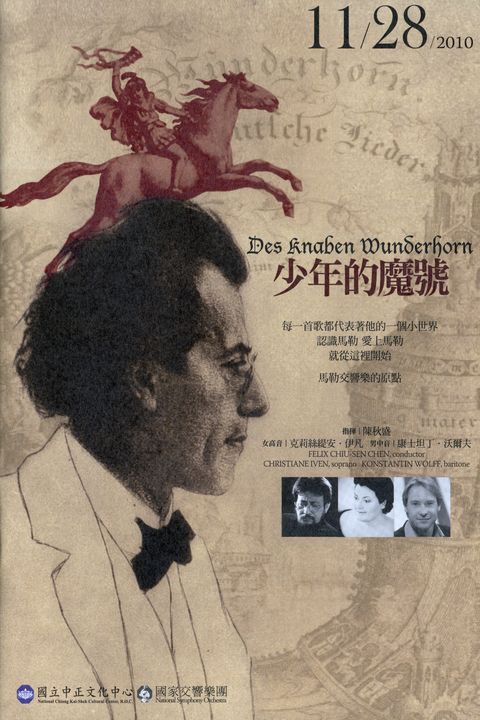
NSO馬勒系列 - 少年的魔號
Des Knaben Wunderhorn
基本資料
2010-11-28
2010/11/28
生前以指揮家身分成就輝煌事業的馬勒(Gustav Mahler, 1860-1911),作為作曲家,一個人,卻是苦悶的。他說:「我是多重的異鄉人:德國人是我為奧國人,奧國人當我是波西米亞人,而對世人而言,我是沒有家的猶太人,永遠在流浪……」,「……我的時代終會來臨」。 馬勒以一首又一首的龐大交響曲構築他所身處的現實世界並表達心中對他的反應(抗爭,譏諷,逃避或接受)──這其中有大自然的美麗與醜陋,人性的高貴、俚俗、天真、虛偽,自己的渴望、嘲弄、絕望、死亡、昇華……總之,世界上的一切,都是他的作曲素材,他的交響樂,是魂砸個人傳記的世界萬花筒,是悲觀稜鏡折射下的世紀末眾生相,音樂寓意及發展多元而複雜,充滿強烈,極端的個人想像力及情感,不見容於傳統的美學規範。在那個時代(19世紀末,20世紀初),人們仍視古典音樂的創作及欣賞,是運行魚與現實世界無關的理想國軌道中,自有其不食人間演火的邏輯系統,是「純粹」的。而馬勒將「花花世界」不分葷素,統統入樂的行徑,在一般人眼中,就像是將高貴藝術品混入低俗雜質一般,令人難以接受。在百年以後的今日──這個階級觀念早已淡泊,所謂「古典音樂」不再唯我獨尊,藝術跨界頻仍的地球村,馬勒的音樂觀似乎合了現代人的口味,已然步出知音難尋的陰影。 若您想接近馬勒,卻仍因他交響曲的「落落長」而卻步不前,讓我建議您從聯篇歌曲《少年的魔號》下手,這是了解馬勒最便捷又正確之路。藉由具體的歌詞,精簡的歌謠,生動的手法,您將能快意翱翔在馬勒無比豐富的想像世界中而不會迷失。這部德國民間詩集,是馬勒醫生創作的靈感泉源,從它包羅萬象的題材,到直接而不經琢磨的文字,都在在與馬勒的藝術觀不謀而合,自然成為她日後源源不斷的創作材料。它不僅寫了為數眾多的《少年的魔號》歌曲,所有的交響樂,也都遍佈了「魔號」之主題及思想。 對身處21世紀的你我而言,馬勒的時代早已悄然降臨。在這馬勒誕辰150週年(2010年)同時也是他逝世100週年(2011年)的時刻,讓我們一同,以兩個樂季的時間,再次深度探討這個身繫世紀末,精神直指21世紀的深邃靈魂。
In his time, Mahler was best known as a conductor, but as a composer, he often said that he felt condemned to loneliness. He considered himself a stranger everywhere. He said: In Germany they take me for an Austrian, in Austria a Bohemian, and everywhere else a homeless Jew. But, Mahler always knew that his time, in the end, would come. Mahler wrote a series of great symphonies, reflecting the world he lived in and expressing hes feeling. This did not prevent him from adding overtone of satire to his work, superimposing and contrsting his feelings regarding the beauty and ugliness of nature, the nobility and hypocrisy of man, celebrating life but also reflecting on death and destruction.These autobiographica1 works are like a ka1eidoscope through which to view the human experience, distorting its mu1tifaceted aspects of yet also allowing for a transcendental expression of some of the darker sides of life as we know it. During Mah1er's time (late nineteenth to early twentieth century), most audiences still conceived of classical music as existing in and for itself, a platonic, utopian representation of musical and human ideals, divorced from and withollt need to portray the less than ideal aspects of the human experience. When Mahler released some of the less than perfect expressions of human experience in his work, he was in some ways pioneering new forms of musical expressions that made many of his contemporary listeners uncomfortable. On the other hand, contemporary listeners are more accepting of and open-minded toward such artistic forms, and Mahler was right in expecting the broader public to understand and to accept his work -on1y it took an extra hundred years. Listeners wanting a good appreciation of Mah1er without tackling his more daunting symphonic works, may enjoy exploring his lieder or art song cycle Des Knaben Wunderhorn for the most direct understanding of Mahler's art. The lyrics, simple folk tunes and lively composition lead you swifdy to Mahler's rich1y imaginative world without getting lost.This collection of German folk songs is the lifelong fountainhead of Mahler's inspiration, with its all-including materials to the unadorned words, it is a source for musical exploitation and development for the rest of his life. He not on1y wrote songs for the masses, but all his symphonic works as well, are charged with elements Des Knaben Wunderhorn. For you and me in the 21st century, celebrating in 2010, the 150th anniversary of his birth, and in 2011 the 100th anniversary of his death, we shall together familiarize ourselves with this fin-de-siecle composer whose music touches the very depths of our 21st century soul.
〈第4號交響曲〉/舒曼;馬勒樂團 改編
〈少年的魔號〉/馬勒
R.SCHUMANN: Symphony No.4 in D minor, Op.120
G.MAHLER: Des Knaben Wunderborn
典藏單位:國家兩廳院,實體文物請至兩廳院表演藝術圖書館申請觀看。
媒體類型:紙本

評分
 電話:02-3393-9798 ︳傳真:02-3393-9798 ︳地址:100011 臺北市中山南路 21-1 號
Copyright ©國家表演藝術中心數位典藏系統 版權所有 All rights reserved.
電話:02-3393-9798 ︳傳真:02-3393-9798 ︳地址:100011 臺北市中山南路 21-1 號
Copyright ©國家表演藝術中心數位典藏系統 版權所有 All rights reserved.